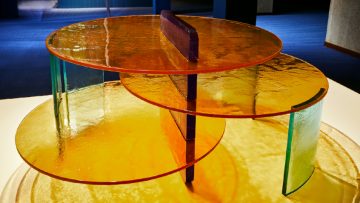

Val Saint Lambert inspires awe in anyone who appreciates the art of glassmaking. For almost two hundred years, this Belgian brand has fused technical mastery, artistic flair, and a steady focus on quality. Its crystal pieces appeal to everyone from seasoned collectors to individuals seeking timeless home accents.
History of the Brand
Early Beginnings in Post-Napoleonic Europe
In 1825, chemist François Kemlin and engineer Auguste Lelièvre purchased a former abbey site in Seraing with a vision of transforming it into a cutting-edge glassworks. They ignited the first furnace in 1826 and opened Belgium’s only dedicated crystal manufacturing site. The region’s industrial growth provided a perfect backdrop for the project, and many skilled artisans from other glass centers joined their venture.
The founders chose heavy-lead crystal for its unmatched clarity and brilliance. Their operation soon reached beyond local markets. Steam engines, blast furnaces, and coal mines in the surrounding Meuse Valley fed Val Saint Lambert’s expansion. Workers found stable employment, and entire families forged lifelong ties to the crystal factory. This era marked the foundation of a brand that would one day embody Belgian craftsmanship at its finest.
Rapid Growth and Peak Recognition
Val Saint Lambert earned an early gold medal in the mid-19th century for its refined crystal. That milestone boosted the brand’s image among critics and consumers who admired its luminosity and flawless finish. By the 1870s, the company had stretched its reach to the United States with a dedicated center in New York. Additional facilities sprang up across Belgium to handle rising demand.
From 1894 to 1914, the company hit a major growth spurt and showcased geometric-patterned crystal at a world’s fair, stunning audiences with modern concepts. Over the next decade, more than 5,000 individuals worked at Val Saint Lambert. The brand exported much of its output, and famed clients included Russian tsars seeking exquisite glassware for their palaces. The large factory complex offered housing for workers, schools for their children, and social amenities that created a self-contained industrial community.
Products and Services
Crystal Tableware and Decorative Pieces
Val Saint Lambert built its core reputation on tableware and decorative items fashioned from heavy-lead crystal. Collectors prized the clear Victorian-style glass of its early years, along with richly colored pieces that introduced dyes and layered effects. As the brand grew, it broadened its catalog to include decanters, vases, serving dishes, and centerpieces adorned with intricate cuts or etchings.
Its approach to design evolved over time. Flowing Art Nouveau forms gave way to sharper Art Deco lines, then pushed forward with collaborations involving modern designers. Through each era, Val Saint Lambert’s pieces exhibited consistent crystal brilliance and unique silhouettes.
Chandeliers and Monumental Works
Val Saint Lambert earned worldwide acclaim for its monumental chandeliers and other showstopping custom creations. Master artisans produced towering crystal chandeliers that lit palaces and mansions across continents. Two fixtures destined for an Indian Maharaja’s palace weighed several tons each and reached well over a dozen meters in height. These record-breaking pieces demonstrated the brand’s engineering know-how and fearless creativity.
The company also engineered epic vases and sculptures that required advanced techniques. One remarkable vase combined dozens of crystal components, stood over two meters tall, and weighed hundreds of kilograms. Craftspeople spent thousands of hours refining and fitting each piece together. Such feats exemplified Val Saint Lambert’s ability to turn imaginative visions into dramatic reality.
Artistic Collaborations and Contemporary Lines
Over the years, Val Saint Lambert forged partnerships with renowned artists and designers. Visionaries introduced Art Nouveau elements in the early 1900s, and later, Art Deco influences shaped the brand’s appearance. More recently, modern creators have added cutting-edge twists, resulting in limited-run designs that appeal to contemporary tastes while honoring the house’s heritage.
Today, Val Saint Lambert produces two main lines. A Heritage Collection preserves classic motifs and celebrates nearly two centuries of tradition. Meanwhile, a modern range embraces bold new shapes, advanced color layering, and unconventional cuts. Both collections rely on master glassblowers and cutters who execute each piece by hand in Belgium.
Quality and Reputation
Exceptional Craftsmanship and Material Purity
Val Saint Lambert’s dedication to heavy-lead crystal yields pieces of remarkable clarity and shine. Artisans rely on time-honored practices that demand precise control over molten glass, from gathering it at the furnace to shaping it with wooden and metal tools. As the crystal cools, teams manage every phase of the annealing process to prevent flaws.
The brand also pioneered double-colored cut crystal in the early 20th century. This technique layers multiple hues of molten crystal. Craftspeople then carve through the top layer to reveal a contrasting color underneath. Designers frequently select bold color pairings that create dramatic visual impact and highlight the depth of each cut.
Historic Endorsements and Royal Accolades
Val Saint Lambert’s legacy includes admiration from royal figures and prestigious institutions. Russian tsars famously collected its elaborate glassware. Belgian royalty recognized it with a royal warrant. The Orient Express incorporated Val Saint Lambert pieces in its stylish trains. These endorsements elevated the brand’s status during its golden era and cemented its name among connoisseurs.
Engineers and glass experts also praised Val Saint Lambert for its skill in producing towering, complex crystal designs. No other Belgian glassworks could match its industrial scale and technical proficiency at the dawn of the 20th century. Buyers valued the brand’s artisanal touch, consistent results, and daring creations that pushed glassmaking boundaries.
Reviews Overview
Collector Communities and Enthusiasts
Collectors of fine crystal often discuss Val Saint Lambert with enthusiasm. They point to the company’s layered, colored crystal as a defining trait of Belgian glass art. Online auction sites highlight the brilliance and craftsmanship behind these pieces. Vintage sets and one-of-a-kind vases command strong interest among buyers who appreciate that distinct interplay of color and light.
Collectors also praise the brand’s consistent quality, noting that many century-old Val Saint Lambert items still retain their sparkle and structural integrity when properly cared for. Individuals who gather Art Nouveau and Art Deco glass consider Val Saint Lambert a top contender for museum-caliber crystal that also fits into a modern home aesthetic.
Tourist and Visitor Feedback
The company’s historical site in Seraing welcomes visitors who want a behind-the-scenes look at its techniques. Guests can often see glassblowers shape molten crystal on the factory floor. In-person tours and exhibits document how Val Saint Lambert survived wars, economic shifts, and changes in design trends while preserving its identity.
Many tourists remark on the intimate scale of the modern operation. They note that it feels more like an artisan workshop than a large industrial complex. This smaller workforce affirms the brand’s dedication to handmade production rather than high-volume output.
Mixed Opinions on Price and Accessibility
Not everyone can afford Val Saint Lambert’s luxury crystal, though collectors argue that each piece’s provenance and craftsmanship justify the premium. Modern shoppers can find cheaper glass alternatives through big-box or online retailers, but the brand’s supporters emphasize that mass-produced glassware rarely achieves the same artistry or brilliance.
Interior designers and hospitality professionals still view Val Saint Lambert as an ideal source for statement pieces. They place Val Saint Lambert chandeliers and vases in high-end hotels or upscale homes to convey sophistication. The brand’s reputation for quality and drama makes it a reliable choice for clients who want lasting visual impact.
General Impressions
Val Saint Lambert blends age-old Belgian craft techniques with forward-thinking design. Enthusiasts often cite its compelling color contrasts and precise cuts as key draws. Walk through the Seraing factory, and you’ll sense the legacy of countless artisans who passed knowledge from mentor to apprentice over generations.
Although the brand no longer produces at the massive scale it did a century ago, its smaller footprint highlights exclusivity and emphasis on excellence. Limited production sometimes means pieces can be harder to find, but collectors relish the thrill of discovering signature designs, whether vintage or newly released.
Local pride also runs deep. Nearby communities consider Val Saint Lambert a cultural treasure and a crucial artifact of Belgian industrial history. Government bodies and preservation advocates often recognize the brand’s site and traditions as symbols of national heritage. Val Saint Lambert, in turn, works to sustain artisanal glassblowing at its original location.
Pros and Cons
Pros
- Timeless Artistry: Generations of skill inform each intricate cut and shape.
- Innovative Color Layering: Double-colored crystal sets Val Saint Lambert apart from many global competitors.
- Royal and Historical Endorsements: Centuries of regal praise and high-profile commissions validate the brand’s prestige.
- Handcrafted in Belgium: Skilled artisans rely on local resources and maintain authentic Belgian heritage.
- Striking Custom Pieces: Monumental chandeliers, vases, and bespoke orders amaze connoisseurs and casual viewers alike.
Cons
- High Price Range: The brand’s dedication to luxury can make certain items inaccessible to budget shoppers.
- Limited Distribution: Smaller production and selective retail partnerships restrict widespread availability.
- Niche Awareness: Mainstream consumers may favor cheaper, mass-produced alternatives due to a lack of familiarity with the brand’s legacy.
- Historic Challenges: Wars, economic shifts, and ownership changes led to reduced scale.
- Slow Output: Artisan methods increase lead times for custom orders.
Final Verdict
Val Saint Lambert offers more than refined crystal objects. The brand preserves and honors nearly two centuries of Belgian craft heritage. Buyers who desire handmade excellence and a genuine story behind each piece will find strong reasons to invest in Val Saint Lambert’s tableware, decorative accents, or monumental chandeliers.
The company’s smaller-scale operation and premium pricing may deter casual shoppers or those who simply need functional glassware. However, collectors and luxury enthusiasts recognize the brand’s ability to deliver art in crystal form. Bold color layers, meticulous cuts, and an illustrious background make Val Saint Lambert a crown jewel of Belgian craftsmanship—perfect for anyone who wants timeless pieces that radiate both tradition and creative spirit.
Nick Oscar