Bonfire logo

Bonfire

The Bonfire platform focuses on public-sector sourcing, supplier responses, evaluations, and related procurement workflows.

Reviews.vc score

4.0 /5
How we scored it

Is Bonfire worth it?

Nick Oscar
Editor, Reviews.vc · Updated July 21, 2026
Good For

Strong end-to-end public-sector procurement workflow, including sourcing, supplier response, evaluation, and contract-related administration.

Caution

Supplier experience is not uniformly smooth; one reviewer described the submission process as cumbersome.

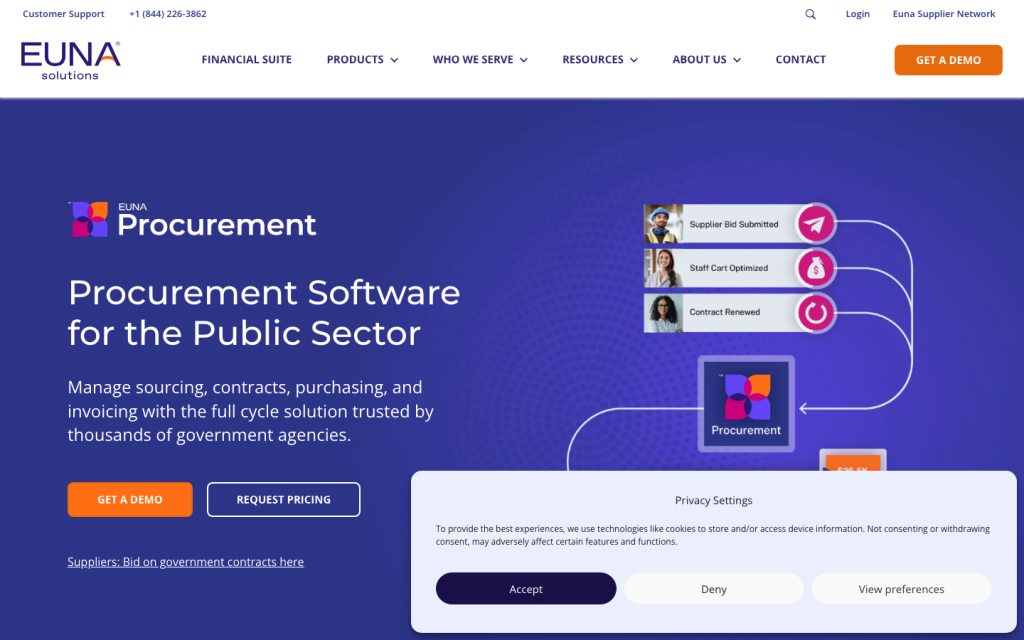
Bonfire product image

Bonfire is a public-sector procurement platform used to manage sourcing from opportunity posting through supplier response, evaluation, contract follow-up, and related purchasing workflows. The strongest fit is for government procurement teams that want a structured online process, supplier-facing self-service, and broader procurement operations beyond basic bid intake.

What is it?

This cloud-based public-sector procurement platform centers on strategic sourcing and related procurement operations. It is positioned for government buyers and the suppliers that respond to their opportunities, with a workflow that extends beyond bid posting into evaluation, contracting, purchasing, and invoicing.

Procurement workflow

For buyers, the platform is documented around creating and posting RFPs and RFx projects, collecting supplier responses, comparing bids, running scorecards, and managing award-related work. The official descriptions also point to broader procurement coverage that includes contract management, supplier performance, purchasing, and invoicing, which makes it better suited to teams that want more than a simple solicitation tool.

Public review feedback reinforces that the system helps streamline bid tracking, documentation, deadlines, and evaluation tasks. The main watch-out is that public documentation does not spell out every post-award detail equally clearly, so teams with highly specialized contract administration requirements should map those needs carefully during evaluation.


Supplier experience and integrations

Supplier-facing workflows are a meaningful part of the product. Suppliers can search opportunities, receive alerts, ask questions, and submit responses through an online portal tied to each buying organization. That is a good fit for agencies that want to reduce email-heavy bid handling and improve participation through self-service access.

On the integration side, the verified surface is narrower than the product workflow: REST API and webhooks are documented, along with ERP and financial-system connectivity. That is enough for technical handoffs and automation planning, but the named native connector inventory is limited in the verified material.

Who it's for

Bonfire is best for public-sector procurement teams that run recurring sourcing events and want a structured digital process for suppliers and evaluators. It also suits organizations that value responsive support and a platform that appears to be usable for daily bid administration rather than only enterprise back-office recordkeeping.

The product looks less ideal for buyers who need a long list of named out-of-the-box integrations or who require extremely detailed public documentation for every specialized workflow edge case. For most government sourcing teams, though, the combination of workflow depth and supplier usability is the main reason to consider it.

Buyer scenarios

Where the product fits — and where to be careful

A city procurement team modernizing RFP intake

Need
A structured way to publish solicitations, collect supplier responses, and manage evaluator scoring in one system.
Why it fits
Bonfire fits this scenario because its documented workflow covers posting, submission, scorecards, and collaborative evaluation.
Watch out
Public documentation is less explicit about every post-award administration detail, so confirm any specialized contract workflow needs.

Worth a deeper evaluation if the team wants a mature sourcing process with clear supplier access.

A public agency that needs technical handoffs into finance or ERP systems

Need
A procurement platform that can exchange data with back-office systems and support automation.
Why it fits
Bonfire fits well enough for API-based and webhook-based integrations, plus ERP and financial connectivity.
Watch out
Validate the named connectors required for the intended procurement and finance workflow.

Good candidate if your integration plan can use APIs rather than relying on a long catalog of native apps.

Pros & Cons

Pros

  • Strong end-to-end public-sector procurement workflow, including sourcing, supplier response, evaluation, and contract-related administration.
  • Supplier experience is well supported with portal access, alerts, online submission, and bid visibility.
  • Officially documented API and webhook access support system handoffs.
  • Public reviews are broadly positive, especially around ease of use, sourcing workflow, and support.

Cons

  • Supplier experience is not uniformly smooth; one reviewer described the submission process as cumbersome.
  • Reviewed public documentation gives uneven detail across post-award workflow components.
  • Named third-party integration breadth is limited in the verified inventory.
Rating Breakdown

Reviews.vc scores

Reviews.vc
4.0
Procurement workflow
5.0

The platform is documented as an end-to-end public procurement workflow with sourcing, posting, supplier response collection, collaborative evaluation, and contract-related capabilities. That breadth aligns with the top end of the rubric for public procurement workflow depth.

Supplier workflow
4.0

Supplier access is clearly supported through portals, search, alerts, Q&A-style communication, and structured online submissions. The workflow is strong, though available documentation does not fully confirm every advanced supplier lifecycle step.

Integrations
3.0

Verified integration evidence is useful but narrow: the documented surface includes REST API and webhooks, plus ERP/financial-system connectivity. The named integration inventory is limited, so this fits a small but practical integration surface.

Implementation & support
4.0

Customer feedback is consistently positive on support, training, responsiveness, and product improvements informed by user feedback. That supports a guided implementation and responsive support impression rather than an exceptional one.

From our complete category comparison

Bonfire alternatives

See the full comparison
Reviewed here
Best for
Procurement and RFP workflow
Key tradeoff
Supplier experience is not uniformly smooth; one reviewer described the submission process as cumbersome.
Best for
State and local bid discovery
Key tradeoff
The workflow surface appears mostly centered on the portal itself rather than on broader third-party integrations.
Best for
Budget and procurement context
Key tradeoff
Implementation can require substantial configuration, training, and ongoing assistance.
Best for
Spend, contract, and incumbent research
Key tradeoff
User reviews are mixed on data quality, with complaints about stale, late, duplicate, or missing records.
ProductReviews.vc scoreBest forKey tradeoff
BonfireReviewed here
4.0/5Procurement and RFP workflowSupplier experience is not uniformly smooth; one reviewer described the submission process as cumbersome.
BidNet Direct
3.5/5State and local bid discoveryThe workflow surface appears mostly centered on the portal itself rather than on broader third-party integrations.
OpenGov
4.0/5Budget and procurement contextImplementation can require substantial configuration, training, and ongoing assistance.
GovSpend
3.8/5Spend, contract, and incumbent researchUser reviews are mixed on data quality, with complaints about stale, late, duplicate, or missing records.

Bonfire customer reviews and sentiment

Based on 10 public customer reviews. Source mix: 8 from softwareadvice.com, and 2 from capterra.com.

10 public reviews analyzed
Positive
90%9 reviews
Mixed
0%0 reviews
Negative
10%1 reviews
Theme and findingMentionsPositiveNegative
Ease of use
The platform is generally described as intuitive and easy for buyers and evaluators to use, though one bid submitter found it cumbersome and difficult to navigate.
651
Sourcing workflow
Buyers report that the platform streamlines RFP administration through bid tracking, documentation management, deadlines, scorecards, and evaluation workflows, saving time and improving visibility.
660
Support
Support is described as responsive, proactive, and helpful with training and implementation, with customer feedback reflected in product updates.
550
Supplier experience
Buyers report positive vendor feedback and easy online proposal uploads, but one supplier reported a cumbersome submission experience and difficulty finding required information.
431
Value for money
Reviewers view the product as well priced for the time savings and RFP-management benefits it provides.
330

Mentions count unique reviews. One review can count as both positive and negative for the same theme when it describes a mixed experience.

This analysis reflects public customer reviews we could identify and access at the time of collection; the displayed source mix may influence the patterns shown.

Pricing and contract model

Buyer-facing pricing is not publicly listed; the documented motion is request pricing with a demo available.

Integrations

Documented connections and access methods for Bonfire.

Developer/API

REST API Public API
Webhooks Public API

Recent signals

Product and company changes worth checking

  • 2026-06-02 · partnership or customer transition

    Canoe Procurement Portal Moving to Bonfire

    On 2026-06-02, Canoe Procurement announced that its procurement portal is moving to Bonfire, with completion expected in Q3 2026.

    Source

FAQ

Who is Bonfire best for?
It is best for public-sector procurement teams that need an end-to-end sourcing workflow with supplier-facing submission and evaluation tools. It is especially relevant for organizations that want a digital portal, structured scorecards, and support for broader procurement operations.
What does Bonfire integrate with?
The verified integration surface includes a REST API, webhooks, and connectivity for ERP and financial systems. Reviewed materials identify a limited set of named product connections.
Revision history
  1. 2026-07-21 Comparison Added alternatives comparison from 12 Best Public Sector Sales Intelligence Platforms in 2026.
  2. 2026-07-21 updated Review updated
Sources analyzed (30)
  1. GTY Technology's Bonfire Business Unit Expands Presence in Government Procurement Through Acquisition of Leading Public Sector Bidding Marketplace, DemandStar – Bonfire gobonfire.com accessed 2026-07-21
  2. Bonfire Standard Vendors – Bonfire gobonfire.com accessed 2026-07-21
  3. Features - Bonfire vendor.gobonfire.com accessed 2026-07-21
  4. Home - Bonfire vendor.gobonfire.com accessed 2026-07-21
  5. eProcurement & Strategic Sourcing Software | Euna Procurement gobonfire.com accessed 2026-07-21
  6. Public Sector Procurement Software | Euna Solutions eunasolutions.com accessed 2026-07-21
  7. Bonfire Celebrates 10 Years of Public Procurement Innovation businesswire.com accessed 2026-07-21
  8. Online Bidding Platform – Welcome to the City of Fort Worth fortworthtexas.gov accessed 2026-07-21
  9. Bonfire & MERX Bring Online Bid Evalutions to the Mainstream | MarketScreener marketscreener.com accessed 2026-07-21
  10. Bonfire Announces Initial Public Offering with GTY Technology Holdings Inc. to Digitize Government with Strategic Sourcing and Procurement Software | VentureBeat venturebeat.com accessed 2026-07-21

Showing 10 of 30 sources · 20 additional sources analyzed

Leave Review
Rate your experience
  • Procurement workflow
  • Supplier workflow
  • Integrations
  • Implementation & support