
Why teams look for a Clay alternative
While Clay excels at building repeatable enrichment workflows, teams often seek alternatives due to its significant learning curve for complex setups and ongoing concerns about cost predictability under the credit-based model. Recurring user feedback also highlights difficulty configuring advanced automation and integrations, making alternatives attractive for buyers wanting a more straightforward path from setup to value.
- ! The platform has a significant learning curve for complex workflows and reusable setups.
- ! User reviews show recurring concerns about cost predictability under the credit-based model.
- ! Some advanced automation and integration behaviors can be difficult to configure or debug.
- ! Reviewed materials provide only a partial snapshot of Clay's dynamic integration catalog.
 Clay
Clay  Starbridge
  GovWin IQ
  GovSpend
  OpenGov
  BidNet Direct
  Citylitics
  Bonfire
  Civic IQ
 Top Clay alternatives (2026)
Ranked by editor score
- 1

Starbridge helps public-sector education sellers find signals, enrich accounts, activate outreach, and manage RFP workflows.
Best for: Covers K–12, higher education, local government, procurement activity, contacts, spending, RFPs, and buying signals.- Covers K–12, higher education, local government, procurement activity, contacts, spending, RFPs, and buying signals.
- AI-supported workflow spans account discovery, prioritization, enrichment, personalized outreach, CRM handoff, and RFP collaboration.
- 2

GovWin IQ combines broad public sector coverage, analyst-supported intelligence, and Deltek-native workflow integrations for government contracting teams.
Best for: Broad coverage across U.S. federal, U.S. SLED, and Canadian public-sector markets- Broad coverage across U.S. federal, U.S. SLED, and Canadian public-sector markets
- Analyst-supported opportunity intelligence backed by a large research operation
- 3
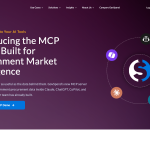
GovSpend helps U.S. K–12 sales teams turn district procurement intelligence into targeted account research and CRM-ready workflows.
Best for: Broad K–12 intelligence spanning spending, bids, contracts, meetings, contacts, and district attributes.- Broad K–12 intelligence spanning spending, bids, contracts, meetings, contacts, and district attributes.
- Strong quantified district and school-board coverage for larger U.S. K–12 districts.
- 4

OpenGov provides a broad public-sector procurement workflow from requests and sourcing through contracts, with a free supplier portal and public APIs.
Best for: Broad public-procurement workflow from purchase request through signed contract.- Broad public-procurement workflow from purchase request through signed contract.
- Supplier portal supports free opportunity access, alerts, Q&A, addenda, guided responses, and electronic submission.
- 5

A review of BidNet Direct’s U.S. government bid coverage, workflow tools, pricing, and integration surface.
Best for: There is broad, documented coverage across federal, state, and local procurement sources.- There is broad, documented coverage across federal, state, and local procurement sources.
- Public pricing is clearly displayed, including named tiers and add-ons.
- 6
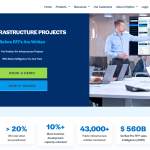
Citylitics is a strong fit for teams selling into public infrastructure projects, with broad coverage, useful CRM integrations, and some data-noise tradeoffs.
Best for: Broad documented coverage across U.S. and Canadian local infrastructure markets.- Broad documented coverage across U.S. and Canadian local infrastructure markets.
- Large public-document corpus and high daily signal volume support early opportunity discovery.
- 7
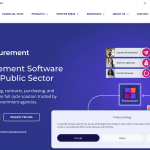
The Bonfire platform focuses on public-sector sourcing, supplier responses, evaluations, and related procurement workflows.
Best for: Strong end-to-end public-sector procurement workflow, including sourcing, supplier response, evaluation, and contract-related administration.- Strong end-to-end public-sector procurement workflow, including sourcing, supplier response, evaluation, and contract-related administration.
- Supplier experience is well supported with portal access, alerts, online submission, and bid visibility.
- 8
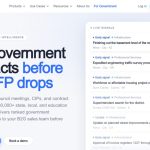
Civic IQ focuses on SLED procurement intelligence, with strong coverage, practical workflow handoff, and documented CRM integrations.
Best for: Broad, well-documented focus on U.S. state, local, and education agencies.- Broad, well-documented focus on U.S. state, local, and education agencies.
- Strong coverage of meeting-level and procurement-related record types.
How we picked these
Every alternative comes from the approved category ranking. We evaluate documented product evidence, buyer-fit tradeoffs, and aggregated public customer feedback. We do not claim hands-on testing unless the linked Review says so, and payment cannot change inclusion or order.
Clay alternatives FAQ
- Which alternative is best for teams that find Clay's credit-based pricing hard to predict?
- Several alternatives offer simpler predictable pricing. Warmly and Common Room publish pricing on request; HubSpot bundles enrichment into CRM subscriptions. Amplemarket and Regie.ai also offer subscription-based models without per-credit billing. Evaluate actual volume needs, because credit-heavy Clay usage may cost more than flat-rate alternatives for high-enrichment teams.
- Can any of these alternatives match Clay's waterfall enrichment and broad integration catalog?
- Unify and 6sense offer multi-source enrichment and strong integration lists, but no alternative documents Clay's sequential waterfall querying across multiple providers. If layered fallback enrichment is critical, Unify is the closest match for orchestration; otherwise, consider whether single-source enrichment from Warmly or HubSpot suffices.