
Apollo.io logo

Apollo.io

Apollo.io combines B2B prospect data with email sequencing, calling, LinkedIn-related tasks, deliverability controls, and CRM-connected workflows for repeatable outbound teams.

Editorial score

4.0 /5
How we scored it

Is Apollo.io worth it?

Nick Oscar
Editor, Reviews.vc · Updated July 23, 2026
Good For

Apollo combines B2B prospecting data and outbound execution in one platform.

Caution

LinkedIn connection requests, messages, and engagement actions are documented as manual tasks or reminders, not autonomous sending.

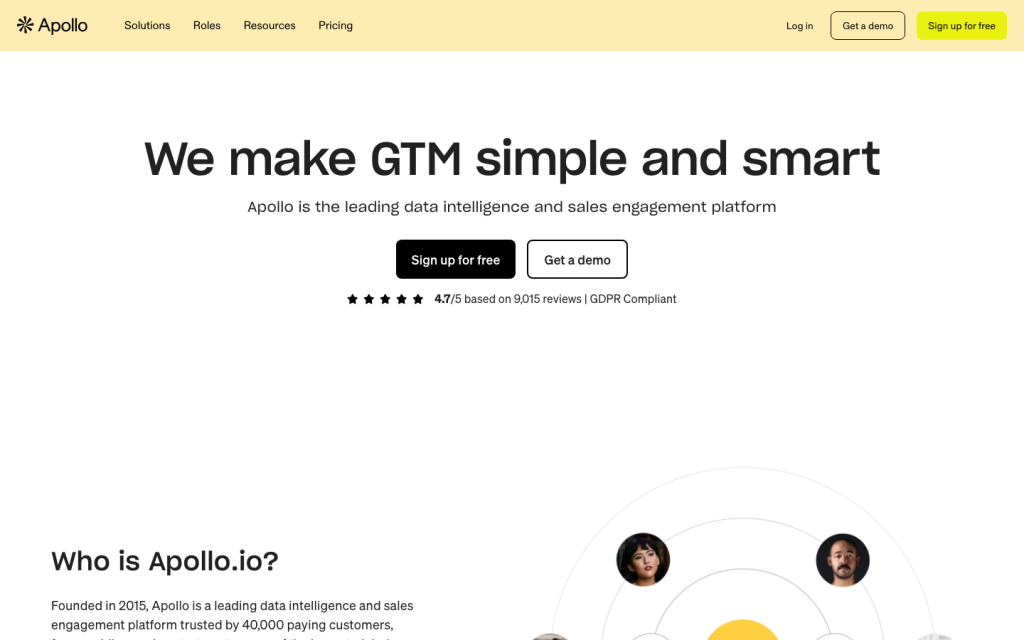
Apollo.io product image
apollo.io

Apollo.io combines B2B prospect data, email sequencing, calling, LinkedIn-related tasks, and CRM-connected workflows in one platform. It is a strong fit for B2B go-to-market teams running repeatable outbound motions, particularly where prospecting and engagement need to share the same workspace. Its main tradeoffs are that email is sent through a connected mailbox rather than by Apollo itself, LinkedIn actions are task-led rather than autonomous sending, and customer feedback points to a meaningful learning curve and uneven support experiences.


What is it?

Apollo.io is a data-intelligence and sales-engagement platform for B2B prospecting and outbound work. It brings contact and company discovery together with sequence execution, calling, task management, workflows, and CRM synchronization. This makes it most relevant when a team wants to move from list building to outreach without maintaining separate systems for each step.

Channels and sequences

Sequences can include scheduled automatic or manual email steps, phone-call touchpoints, and LinkedIn-related tasks. Users can start from templates, clones, AI-assisted setups, or a blank sequence. Rulesets can pause or finish activity after events such as replies, meetings, unsubscribes, calls, bounces, or spam rejections, while workflows can route contacts using filters, enroll or remove them from sequences, update records, assign tasks, and send alerts.

The practical distinction is important: Apollo documents native email workflow through a connected mailbox and an integrated dialer, but LinkedIn connection requests, messages, profile views, and post interactions are task or reminder steps. Teams seeking fully automated LinkedIn execution should not assume it is included.

Personalization and deliverability

Apollo documents AI-assisted sequence creation, generated messaging, and AI Research for prospect research and personalized email language. It also supports A/B tests for individual email-sequence steps, with even variant distribution. Those tests do not extend to non-email steps or an entire multistep flow.

For sender controls, Apollo documents per-mailbox daily and hourly limits, message delays, pausing after limits are reached, mailbox rotation, warm-up and inbox ramp-up, domain-authentication checks, blocklist checks, inbox-placement tests, and diagnostics. These are safeguards and monitoring tools, not a promise of inbox placement. Because campaigns use a connected mailbox, teams should retain responsibility for mailbox setup and sending policy.

Integrations and analytics

Salesforce synchronization supports configurable push and pull behavior, field and stage mapping, and activity synchronization. HubSpot is documented as bidirectional for contacts, accounts, and deals, with Apollo activity pushed to HubSpot. Apollo also provides a REST API and MCP-based access for supported AI tools, while its workflow capability connects to external applications.

Reporting includes sequence engagement, calls, sentiment, delivery, bounces, funnel activity, and website-visitor measures. This is a capable operating layer for teams that need activity visibility, but buyers should validate required plan access and account for the limit of one connected CRM at a time.

Who it's for

Apollo is best suited to B2B sales and go-to-market teams with repeatable outbound motions that combine prospect data, email, calling, LinkedIn-related manual tasks, and CRM workflow. It can also suit individual sellers and smaller teams that want a free entry point before adopting paid sequencing and connection options.

It is especially relevant for RevOps and sales-operations teams that need CRM mapping, activity logging, and configurable workflows. Larger organizations with complex security, governance, integration, or external-data requirements should expect a custom-plan discussion. Teams prioritizing a very simple interface, unrestricted high-volume cold email, or automated LinkedIn outreach should evaluate those requirements carefully.

Buyer scenarios

Where the product fits — and where to be careful

Outbound team consolidating prospecting and engagement

Need
A B2B team needs to find prospects, run email and call outreach, and manage follow-up without switching between separate data and engagement tools.
Why it fits
Apollo combines B2B prospect data with email sequences, an integrated dialer, LinkedIn-related tasks, workflows, and CRM synchronization.
Watch out
Email requires a connected mailbox, and LinkedIn actions stay as manual tasks or reminder steps rather than autonomous sending.

Shortlist Apollo when an integrated prospecting-to-outreach workflow matters more than fully automated social execution.

RevOps team standardizing CRM-connected outbound

Need
Sales operations needs mapped records, synchronized activity, routing, and measurable sequence activity around Salesforce or HubSpot.
Why it fits
Apollo documents configurable Salesforce sync, bidirectional HubSpot coverage, activity logging, workflows, API access, and sequence analytics.
Watch out
Only one CRM can be connected per account, and teams should validate plan access for required features and API capacity.

It’s a good fit for a single-CRM outbound operating model; confirm integration design and plan limits before rollout.

Pros & Cons

Pros

  • Apollo combines B2B prospecting data and outbound execution in one platform.
  • It supports email sequences, an integrated dialer, and LinkedIn-related task steps.
  • It offers documented sending limits, mailbox rotation, warm-up, diagnostics, and inbox placement testing.
  • It provides configurable Salesforce and HubSpot synchronization plus a public API and workflow connections.
  • It has a free plan and published annual billing prices for paid tiers.

Cons

  • LinkedIn connection requests, messages, and engagement actions are documented as manual tasks or reminders, not autonomous sending.
  • Email campaigns require a connected mailbox; Apollo does not send email on the user’s behalf.
  • Only one CRM can be connected to an Apollo account at a time.
  • Customer reviews describe a dense interface, setup friction, and inconsistent support experiences.
  • Customer feedback also raises concerns about credit consumption, upgrades, and value at scale.
Editorial score breakdown

Editorial scores

Editorial score
4.0
Channel coverage
4.0

Apollo supports documented email, integrated calling, and LinkedIn-related task touchpoints. The LinkedIn component is task-based rather than verified autonomous sending, which keeps the product below exceptional native multichannel orchestration.

Sequences & personalization
4.0

Sequences support scheduled email and task steps, reply and event rules, workflow branching, task assignment, AI-assisted content, and email-step A/B testing. Public reviews value the automation but also report setup complexity and occasional workflow or tracking issues.

Deliverability controls
4.0

Documented controls include authentication checks, sending limits, delays, mailbox rotation, warm-up, inbox ramp-up, blocklist checks, inbox-placement tests, and deliverability diagnostics. No independent evidence here establishes delivery outcomes.

Integrations & analytics
4.0

Apollo documents configurable Salesforce and HubSpot sync, named sales-tool connections, a public API, MCP access, and workflow connections. Sequence reporting covers engagement, delivery, bounce, call, sentiment, funnel, and website-visitor measures; one CRM at a time is a material constraint.

From our complete category comparison

Apollo.io alternatives

See the full comparison
Reviewed here
Best for
Outbound prospecting complement
Key tradeoff
User reviews frequently mention stale, missing, duplicate, or inaccurate data.
Best for
Contact enrichment complement
Key tradeoff
User reviews frequently raise concerns about stale or inaccurate contact data.
Clay
4.3/5
Best for
Custom enrichment automation
Key tradeoff
The platform has a significant learning curve for complex workflows and reusable setups.
Best for
Government and education signal-to-CRM execution
Key tradeoff
The product can feel broad and terminology-heavy for new users.
ProductEditorial scoreBest forKey tradeoff
Apollo.ioReviewed here
3.5/5Outbound prospecting complementUser reviews frequently mention stale, missing, duplicate, or inaccurate data.
ZoomInfo
3.5/5Contact enrichment complementUser reviews frequently raise concerns about stale or inaccurate contact data.
Clay
4.3/5Custom enrichment automationThe platform has a significant learning curve for complex workflows and reusable setups.
Starbridge
4.5/5Government and education signal-to-CRM executionThe product can feel broad and terminology-heavy for new users.
Customer sentiment

Apollo.io customer reviews and sentiment

Based on 232 public customer reviews. Source mix: 124 from trustpilot.com, 58 from mcleanco.com, 16 from capterra.com, 15 from softwareadvice.com, 10 from g2.com, and 9 from trustradius.com.

Customer sentiment is analyzed separately and does not determine the Reviews.vc editorial score.

232 public reviews analyzed
Positive
31%71 reviews
Mixed
39%90 reviews
Negative
31%71 reviews
Theme and findingMentionsPositiveNegative
Ease of use
The platform can feel intuitive for basic prospecting once learned, but its dense feature set, changing layout, and sequence setup create a steep, sometimes clunky learning curve for new users.
1035454
Value for money
Buyers see potential value in the all-in-one tool and free tier, but frequently question value at scale because pricing, credit consumption, upgrade pressure, and unused-credit policies can feel restrictive or unclear.
1003171
Sequence automation
Email sequences and automated follow-ups are valued for reducing manual outreach work, though users report difficult setup, occasional automation or tracking failures, and limitations for LinkedIn/InMail workflows.
695024
Support
Support experiences are inconsistent: some users receive fast, helpful human assistance, while others report slow responses, generic chatbot interactions, repeated explanations, and unresolved billing or account issues.
662542
Integrations
LinkedIn, CRM, Gmail, and Sales Navigator connections can streamline prospecting and outreach, but integration coverage and reliability are uneven, with reported sync duplicates, extension glitches, and workflow limitations.
403113

Mentions count unique reviews. One review can count as both positive and negative for the same theme when it describes a mixed experience.

This analysis reflects public customer reviews we could identify and access at the time of collection; the displayed source mix may influence the patterns shown.

Review sentiment over time

PeriodnPositiveMixedNegative
2025 Q4Limited sample1100
2026 Q156171326
2026 Q285262336
2026 Q317557

Only periods containing dated reviews are shown; gaps between labels mean no dated reviews were available for those periods.

Pricing and contract model

Apollo offers a Free plan and published per-seat monthly prices billed annually for Basic, Professional, and Organization. Trial plans are available, and enterprise or external-product requirements may involve custom pricing and terms.

PlanPriceIncludes
Free
$0
free plan; billing period not applicable
$0 free plan; email campaigns included.
Basic
$49 per seat per month
billed annually
$49 per seat per month, billed annually.
Professional
$79 per seat per month
billed annually
$79 per seat per month, billed annually.
Organization
$119 per seat per month
billed annually; page indicates custom pricing and terms for organization-scale needs
$119 per seat per month, billed annually, with a three-seat minimum; custom pricing and terms may apply for organization-scale needs.

Integrations

Documented connections and access methods for Apollo.io.

CRM

Salesforce Native
HubSpot Native
Zoho CRM Native
Pipedrive Embedded

Automation

Outreach Native
SalesLoft Native
Marketo Native
SendGrid Native
Klaviyo Via automation
Mailchimp Via automation

Developer/API

Apollo Public API Public API
Apollo OpenAPI specification Public API

AI protocol

Claude Protocol
ChatGPT Protocol
Perplexity Protocol
Apollo MCP Protocol

Productivity suite

Gmail Embedded
Google Calendar Embedded

Data warehouse/BI

Snowflake Via automation
Amplitude Via automation

Browser extension

LinkedIn Embedded
Apollo Chrome Extension Embedded
Company websites Embedded

Data import/export

Google Sheets Via automation
Airtable Via automation

Recent signals

Product and company changes worth checking

  • 2026-04-29 · product release

    Apollo.io Launches App in ChatGPT

    Apollo announced a beta ChatGPT app that lets GTM teams research, enrich, act, and analyze in a ChatGPT conversation through Apollo MCP.

    Source

FAQ

How much does Apollo.io cost?
Apollo lists a Free plan at $0. Its published annual billing prices are $49 per seat per month for Basic, $79 per seat per month for Professional, and $119 per seat per month for Organization, which has a three-seat minimum. Complex enterprise and external product use cases may require custom pricing and terms.
Which outreach channels does Apollo.io support?
Apollo supports email through a connected mailbox, integrated calling, and LinkedIn-related tasks such as connection requests, direct messages, profile views, and post interactions. The LinkedIn actions are documented as tasks or reminders rather than autonomous sending.
How does Apollo.io automate sales sequences?
Apollo sequences can use scheduled email and task steps, event-based rules for replies and other outcomes, and workflows that filter and route contacts, manage sequence enrollment, assign tasks, update records, and send alerts. Apollo also documents AI-assisted sequence and message creation.
What deliverability controls does Apollo.io provide?
Apollo documents per-mailbox sending limits, delays, mailbox rotation, warm-up, inbox ramp-up, authentication and blocklist checks, inbox-placement tests, and deliverability diagnostics. These controls help teams configure and monitor sending; they do not guarantee inbox placement.
What does Apollo.io integrate with?
Named connections include Salesforce, HubSpot, Zoho CRM, Outreach, SalesLoft, Marketo, SendGrid, Gmail, Google Calendar, and AI tools through Apollo MCP. Apollo also documents a public API and workflow connections to external applications. An account can connect one CRM at a time.
Who is Apollo.io best for?
Apollo is best for B2B sales and go-to-market teams that want prospect data and repeatable outbound execution in one system. It is relevant to individual sellers, smaller teams using a free entry option, and RevOps teams needing CRM sync and configurable workflows; it is not established as a tool for autonomous LinkedIn outreach or unrestricted high-volume cold email.
Change notes Corrections policy
  1. 2026-07-21 Comparison Added alternatives comparison from 12 Best Public Sector Sales Intelligence Platforms in 2026.
  2. 2026-07-23 updated Review updated
Sources analyzed (69)
  1. Apollo Outreach: Multichannel Sales Engagement Platform | Apollo.io www.apollo.io accessed 2026-07-23
  2. Create a Sequence – Apollo knowledge.apollo.io accessed 2026-07-23
  3. Sequences Overview – Apollo knowledge.apollo.io accessed 2026-07-23
  4. Use Apollo with LinkedIn to Send Personalized Messages – Apollo knowledge.apollo.io accessed 2026-07-23
  5. Which Platform Offers the Best Data Coverage Globally in 2026? apollo.io accessed 2026-07-23
  6. Apollo.io Data Network | B2B Sales Intelligence Platform apollo.io accessed 2026-07-23
  7. Apollo Developer Docs docs.apollo.io accessed 2026-07-23
  8. New Report: Apollo.io Exceeds Industry Benchmarks for Data Quality and Cold Email Outreach prnewswire.com accessed 2026-07-23
  9. Apollo.io Launches App in ChatGPT prnewswire.com accessed 2026-07-23
  10. Configure Email Sending Limits – Apollo knowledge.apollo.io accessed 2026-07-23

Showing 10 of 69 sources · 59 additional sources analyzed

Leave Review
Rate your experience
  • Channel coverage
  • Sequences & personalization
  • Deliverability controls
  • Integrations & analytics