
AI Workflow Automation Reviews

Compare AI Workflow Automation products by editorial score, reader feedback, strengths, cautions, and brand facts.

Matching products
5
Latest review update
Jul 26, 2026
Reset
Editorial score
4.0

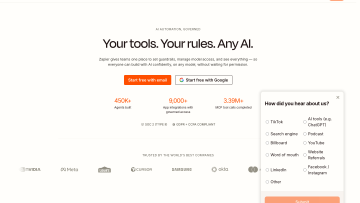
Zapier combines broad app automation, AI workflows and developer tools, but high-volume buyers should model task-based costs carefully.

Good For

Connects more than 9,000 apps through trigger-and-action workflows.

Caution

Task-based billing, AI model multipliers, tool calls and overages can raise costs for high-volume workflows.

Editorial score
4.5

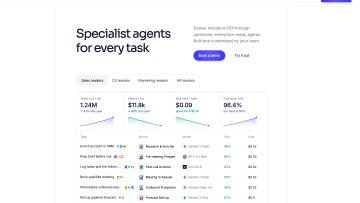
Relevance AI is a low/no-code platform for building connected AI-agent and multi-agent workflows.

Good For

Visual Workforces coordinate specialized agents with fixed, conditional, or AI-directed handoffs.

Caution

Usage is metered through separate Actions and Vendor Credits, so buyers should model expected tool and model consumption.

Editorial score
4.5

Gumloop is a no-code platform for visual AI automations, agents, and connected business workflows.

Good For

Visual builder with 100+ pre-built nodes and integrations.

Caution

Credit consumption can vary with model choice, tokens, tools, and task length.

Editorial score
3.8

Lindy combines an AI work assistant with a flexible builder for multi-step, trigger-based agent workflows.

Good For

Broad workflow builder with triggers, branching, parallel actions, timers, exception handling, testing, and templates.

Caution

Credit consumption varies by model, complexity, premium actions, and run duration; unused credits do not roll over.

Editorial score
4.8

n8n combines visual workflow automation, code, AI agents, and self-hosting for technical teams.

Good For

Visual workflows can be extended with JavaScript, Python, npm packages, and custom HTTP or GraphQL requests.

Caution

Self-hosting leaves the buyer responsible for hosting, security, upgrades, and reliability.