
Why teams look for a Copy.ai alternative
A switch from Copy.ai can make sense when the priority extends beyond AI-assisted content and workflow building. Some teams need broader contact and account enrichment, while others need coordinated sales, marketing, service, and reporting in one CRM. Account-based teams may prioritize intent and buying-group signals, and revenue leaders may prefer conversation-derived deal inspection and coaching. For government, K-12, and higher-education sellers, public-sector procurement and spending intelligence is a distinct requirement. Compare each alternative by its strongest use case, implementation effort, data-validation needs, and integration fit.
- ! Job-openings research can be stale, incomplete, unavailable for companies without public openings, or constrained for large result sets.
- ! Content agents require human review and publishing; the product is not documented as an autonomous execution system.
- ! Customer reviews frequently cite generic, inaccurate, or editing-heavy output for longer or specialized content.
- ! Review feedback also raises recurring concerns about value, usage limits, cancellation or refund experiences, bugs, and workflow disruptions.
 Copy.ai
  Clay
Clay  HubSpot
  Starbridge
  6sense
  Demandbase
  Gong
Gong  Common Room
  Unify
Unify Top Copy.ai alternatives (2026)
Ranked by editor score
- 1
Clay combines multi-source enrichment, workflow automation, and a large integration surface for GTM teams that need scalable research and CRM syncing.
Best for: Broad documented enrichment across contact, company, intent, and research use cases.- Broad documented enrichment across contact, company, intent, and research use cases.
- Waterfall enrichment can query multiple providers sequentially to improve coverage.
Pick Clay when your team wants to build custom enrichment, research, and signal-to-action workflows across sales, marketing, growth, and RevOps. It is particularly suited to combining contact, company, intent, and research enrichment with waterfall coverage and CRM synchronization. Plan for time to learn complex workflows and monitor credit usage closely.
- 2
HubSpot combines a CRM-centered customer platform with Breeze AI, automation, reporting, APIs, and a broad integration ecosystem for coordinated GTM workflows.
Best for: Shared CRM foundation spanning marketing, sales, service, reporting, and revenue workflows.- Shared CRM foundation spanning marketing, sales, service, reporting, and revenue workflows.
- Broad documented automation and AI-assisted research, outreach, and customer-service workflows.
Pick HubSpot when marketing, sales, service, automation, and reporting need to operate from a shared CRM foundation. It fits cross-functional teams that value connected customer records, configurable reporting, broad integrations, and AI-assisted workflows. Complex sales processes and advanced automation can require additional administration and plan-specific configuration.
- 3
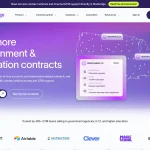
Starbridge helps public-sector education sellers find signals, enrich accounts, activate outreach, and manage RFP workflows.
Best for: Covers K–12, higher education, local government, procurement activity, contacts, spending, RFPs, and buying signals.- Covers K–12, higher education, local government, procurement activity, contacts, spending, RFPs, and buying signals.
- AI-supported workflow spans account discovery, prioritization, enrichment, personalized outreach, CRM handoff, and RFP collaboration.
Pick Starbridge for government, K-12, higher-education, and wider public-sector sales motions that depend on procurement opportunities, buyer intelligence, public spending context, and market signals. It brings together RFPs, buyer contacts, contracts, meeting records, grants, and early buying signals, with Salesforce and HubSpot integrations. New users should expect a broad product vocabulary and may benefit from training for advanced use.
- 4
6sense combines B2B account intelligence, predictive prioritization, AI-assisted workflows, and GTM activation for account-based revenue teams.
Best for: Broad, documented mix of intent, web, CRM/MAP, firmographic, technographic, contact, and buying group signals.- Broad, documented mix of intent, web, CRM/MAP, firmographic, technographic, contact, and buying group signals.
- Configurable workflows support enrichment, audience activation, account creation, contact acquisition, and monitored execution.
Pick 6sense when a mature B2B team is coordinating account-based sales and marketing plays across connected systems. Its fit is strongest for teams using intent, web, CRM, marketing automation, firmographic, technographic, contact, and buying-group signals to prioritize and activate accounts. It rewards teams that can invest in setup, validation, mapping, and ongoing administration.
- 5
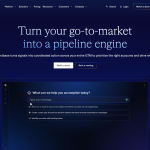
Demandbase is an account-based B2B GTM platform that combines account intelligence, orchestration, AI-assisted workflows, and broad GTM-stack activation.
Best for: Broad coverage of account, people, intent, engagement, technographic, and buying-group signals.- Broad coverage of account, people, intent, engagement, technographic, and buying-group signals.
- Account-based automations can qualify audiences, branch by conditions, and trigger connected GTM actions.
Pick Demandbase when your B2B organization has a defined account-based motion across sales, marketing, advertising, and RevOps. It is a strong fit for teams that want to qualify audiences, orchestrate account-based actions, and work from account, people, intent, engagement, and buying-group signals. Allow time for setup, signal filtering, and reporting configuration.
- 6

Gong connects customer interactions and CRM context to support sales execution, coaching, forecasting, engagement, and selected CRM updates. It is best evaluated through a pilot of the AI and workflow outputs your team relies on.
Best for: Connects customer interactions, CRM records, contacts, and external signals for revenue workflows.- Connects customer interactions, CRM records, contacts, and external signals for revenue workflows.
- Supports conversation analysis, deal and account insights, coaching, forecasting, sales engagement, and selected CRM updates.
Pick Gong when the immediate priority is improving coaching, deal inspection, forecasting, and follow-through using customer conversations and CRM context. It is well suited to revenue teams that want conversation analysis, deal and account insights, sales engagement support, and selected CRM updates. Validate transcript quality, multilingual coverage, summary quality, and search workflows for your operating environment.
- 7
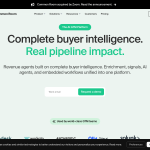
Common Room unifies buyer signals, scoring, AI-assisted research, and GTM activation for B2B RevOps, sales, and marketing teams.
Best for: Common Room brings together buyer signals from customer, product, CRM, community, social, code collaboration, marketing, and engagement sources.- Common Room brings together buyer signals from customer, product, CRM, community, social, code collaboration, marketing, and engagement sources.
- It supports configurable contact and organization scoring with fit and behavioral rules; score models refresh every four hours.
Pick Common Room when your team needs to unify buyer signals from its existing customer, product, CRM, community, social, code collaboration, marketing, and engagement tools. It fits teams that want configurable scoring, research, personalization drafts, CRM writeback, and structured signal-driven plays. Review workflow-change requirements, failed-contact handling, and CRM sync behavior during evaluation.
- 8

Unify combines GTM signals, AI-assisted research, trigger-based outbound workflows, and CRM activation for B2B sales, growth, marketing, and RevOps teams.
Best for: It combines first-party engagement, imported data, third-party sources, and AI-discovered signals for prospecting and prioritization.- It combines first-party engagement, imported data, third-party sources, and AI-discovered signals for prospecting and prioritization.
- It supports configurable agent workflows, trigger-based Plays, sequencing, routing, CRM actions, Slack alerts, and webhooks.
Pick Unify when outbound and expansion teams want to turn account, contact, website, product, CRM, and intent signals into targeted outreach. It fits teams using trigger-based Plays, configurable agents, sequencing, routing, CRM actions, Slack alerts, and webhooks. Confirm plan-level CRM write access and validate data quality, geographic fit, and Salesforce synchronization for your use case.
How we picked these
Every alternative comes from the approved category ranking. We evaluate documented product evidence, buyer-fit tradeoffs, and aggregated public customer feedback. We do not claim hands-on testing unless the linked Review says so, and payment cannot change inclusion or order.
Copy.ai alternatives FAQ
- What should teams compare when evaluating Copy.ai alternatives?
- Start with the workflow you need to improve. Compare enrichment and research coverage, signal sources, CRM and activation integrations, automation controls, data-validation requirements, usability, and the level of human review your process requires.
- Which alternative is best for custom enrichment workflows?
- Clay is the strongest fit on this list for teams building custom enrichment, research, and signal-to-action workflows. Its documented coverage includes contact, company, intent, and research use cases, along with waterfall enrichment and a broad integration surface.
- Which Copy.ai alternative is best for a shared CRM across teams?
- HubSpot is the best fit here for cross-functional teams that want marketing, sales, service, automation, and reporting coordinated in a shared CRM. Its strengths include CRM-centered data, reporting, workflows, APIs, webhooks, and a broad integration ecosystem.
- Which option fits public-sector sales?
- Starbridge is the focused option for government, K-12, higher-education, and broader public-sector sales. Its documented coverage includes procurement opportunities, buyer contacts, public spend, contracts, RFPs, grants, meeting records, and early buying signals.